Rakovac
About 12 minutes by car
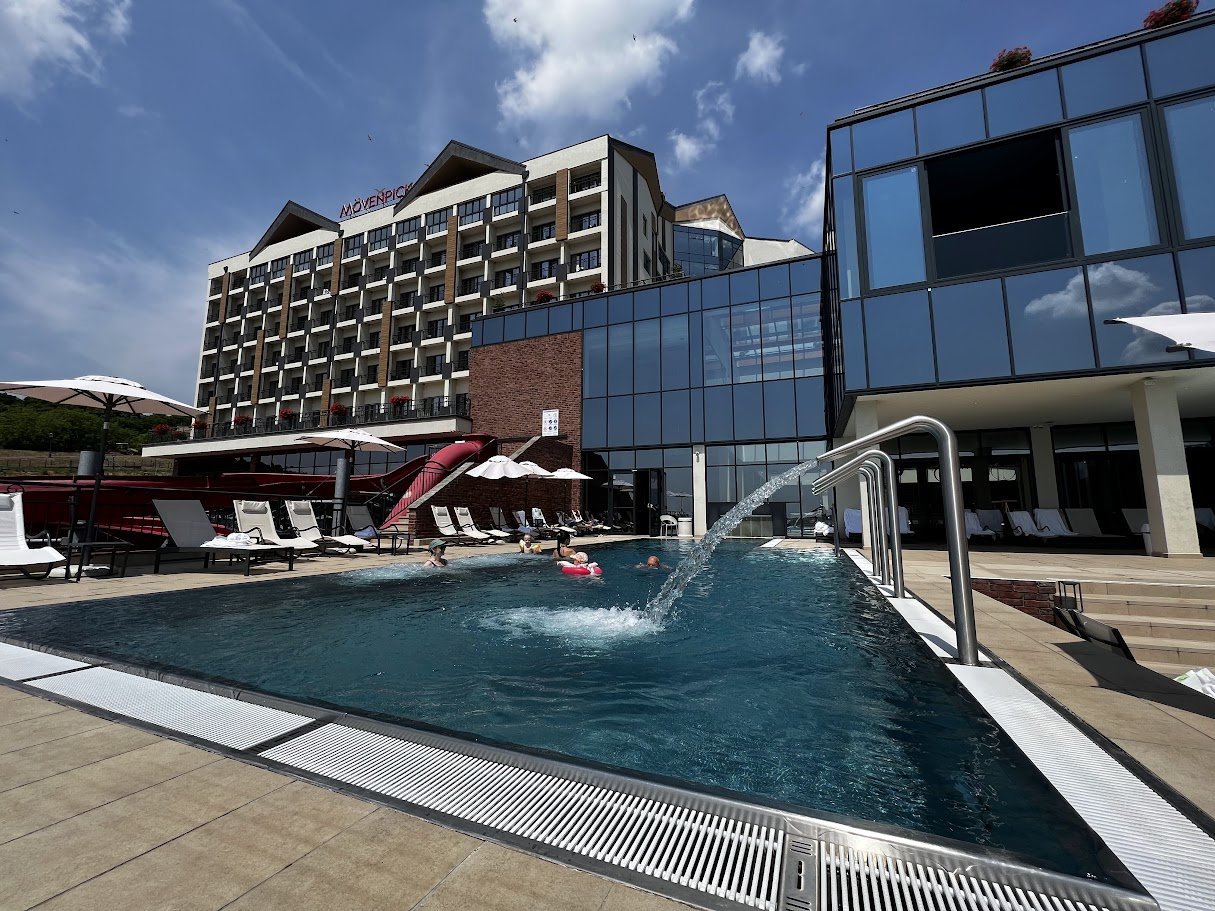
Vrdnik spa and Fruške Terme
A spa village on the other side of the mountain, with the large Fruške Terme thermal resort, the older Termal pools and traditional restaurants.
Beočin · about 11 minutes by car
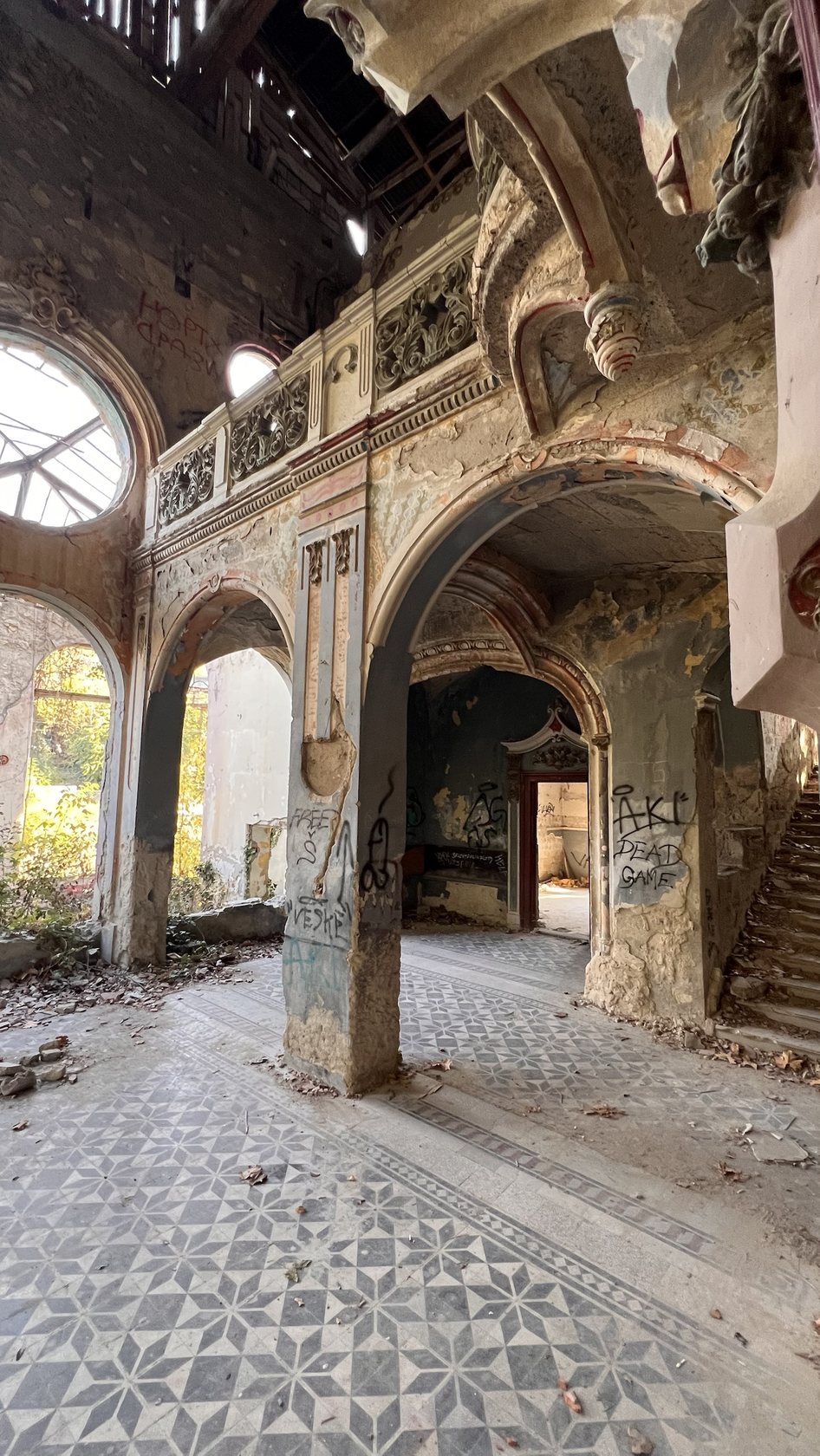
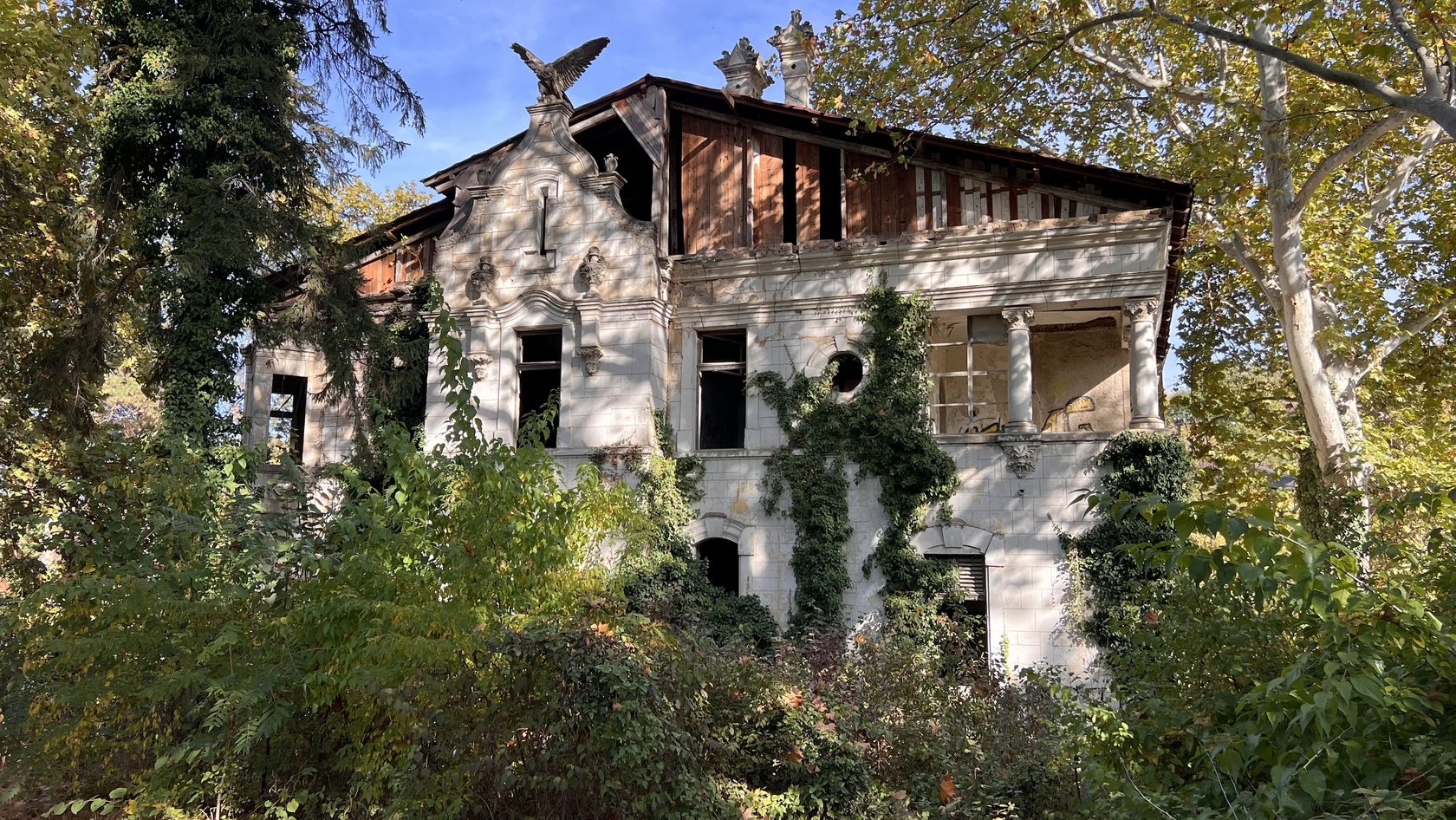
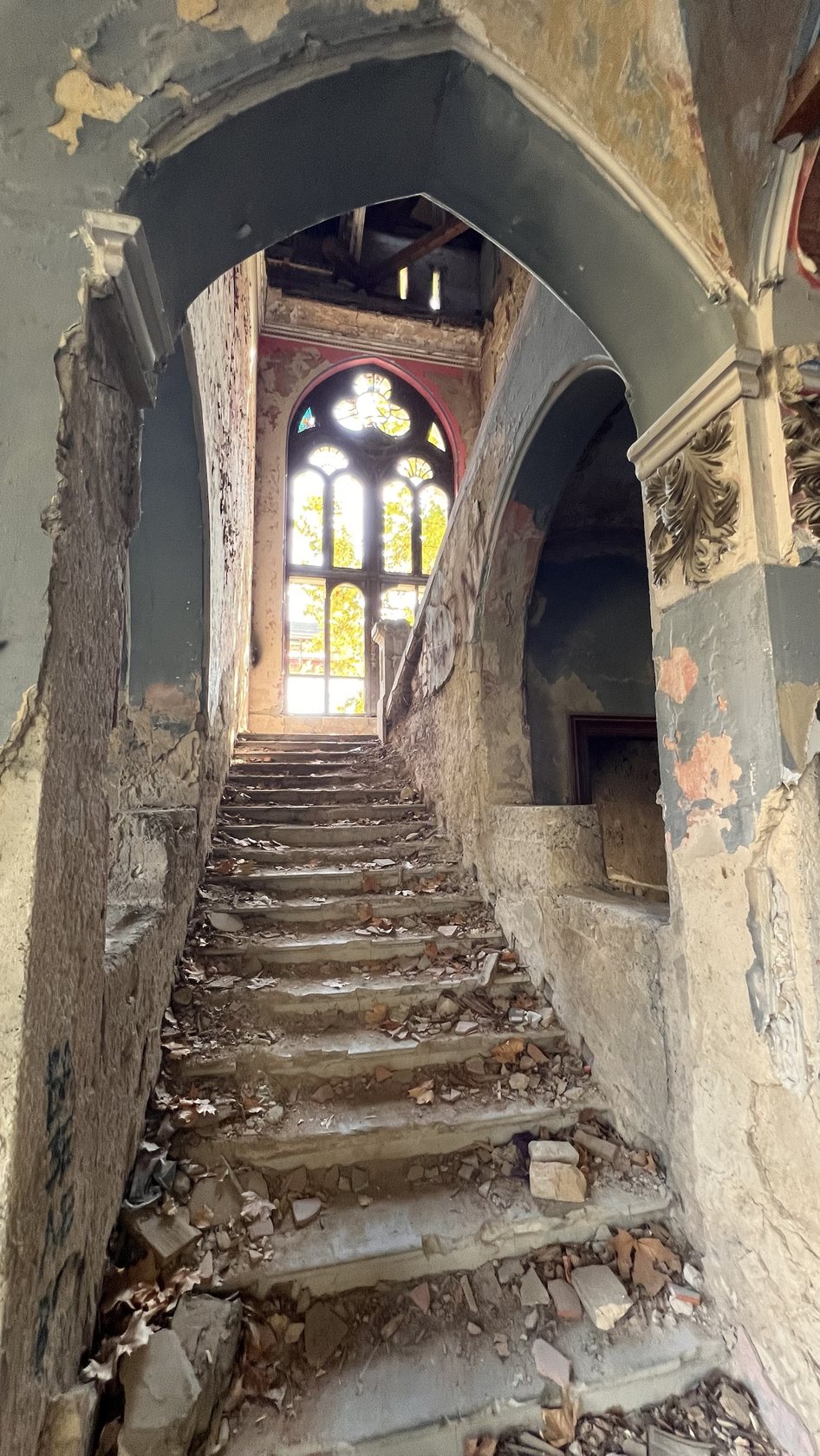
A fairy-tale Secession castle built at the end of the 19th century by the owners of the Beočin cement works, later a library, school and restaurant, a set for Clint Eastwood and Emir Kusturica, and today an empty “ghost house” behind a fence.
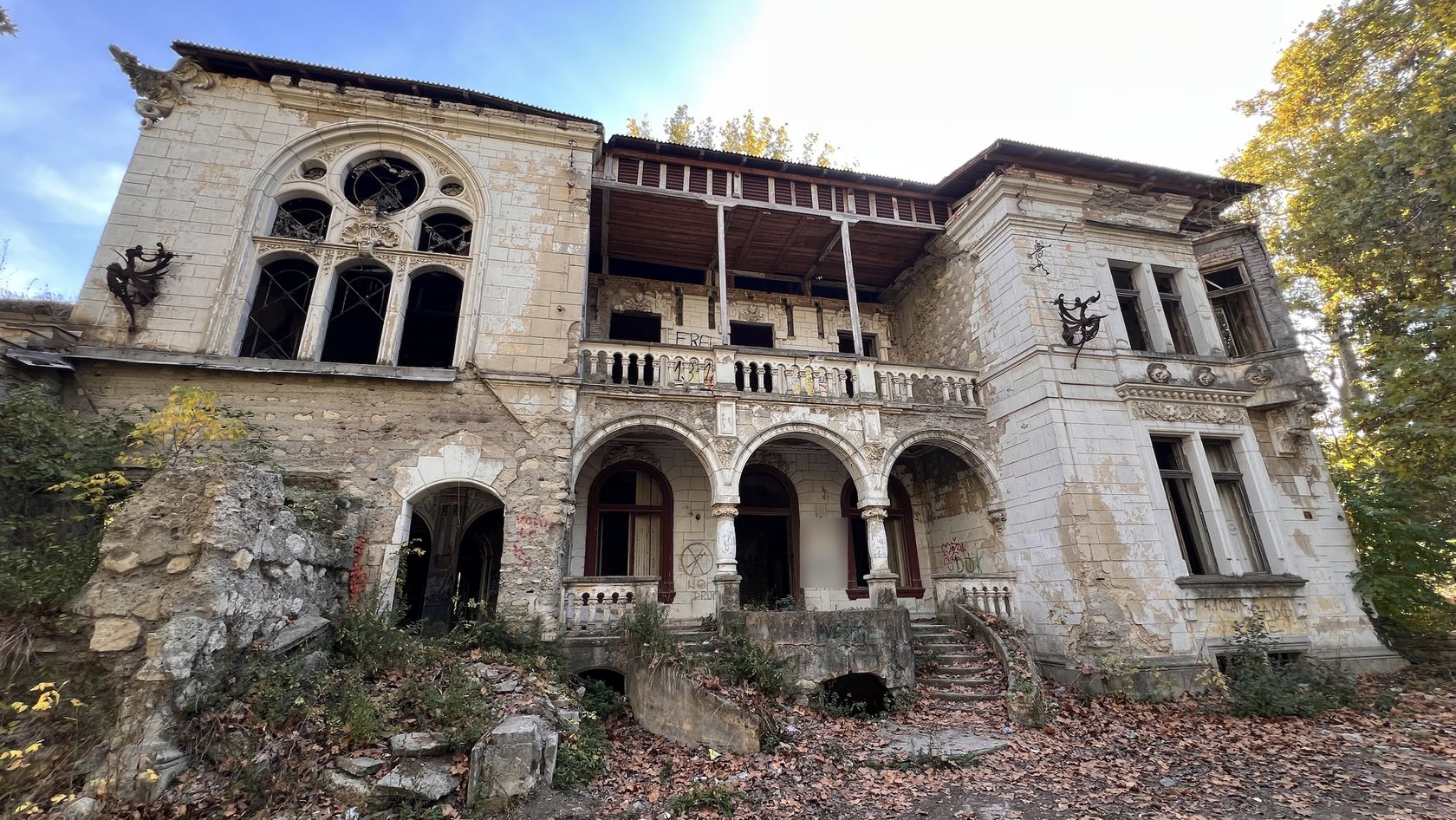
Spitzer Castle (Serbian Špicerov dvorac, also Stari dvorac) stands in Beočin, next to the old cement works, about 7 km from Stari Rakovac. It is a protected cultural monument, but it is in very poor condition and closed to visitors.
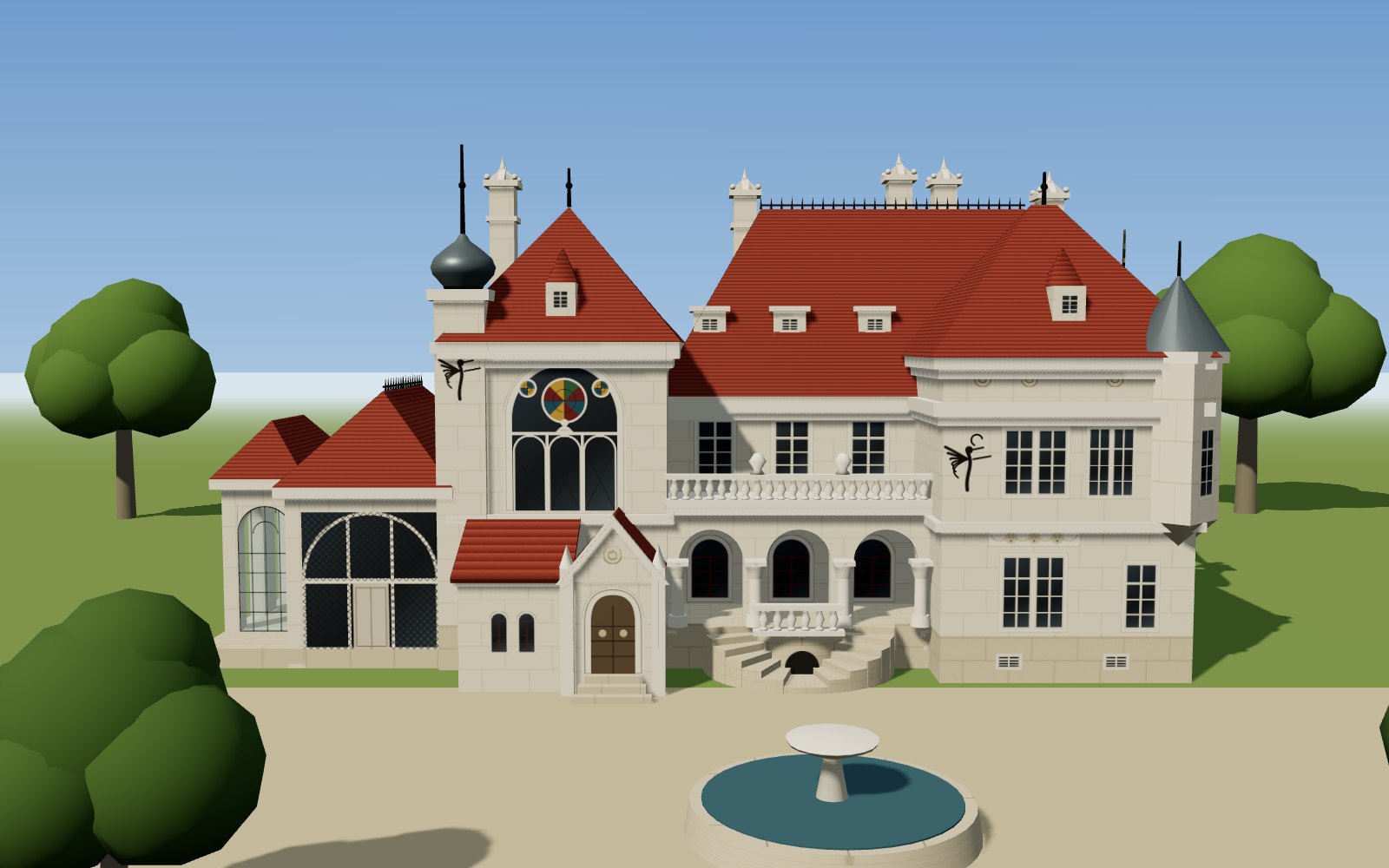
Photos: the castle outside and inside, photographed by Konstantin Stein in October 2026. What it looked like originally: a reconstruction and 3D model.
Cement made Beočin. Portland cement was produced here from 1867, and in 1887 the works were bought by the company Redlich, Orenstein und Spitzer (021.rs, Dvorci Srbije). Before the First World War the factory employed almost 2,000 workers, and Beočin cement went into the Hungarian Parliament in Budapest (021.rs).
The castle was built between 1892 and 1898 as the family villa of Eduard (Ede) Spitzer, one of the co-owners (Beočin municipality, Vojvodina Travel). He was born in 1845 and married Anna Orenstein, daughter of Baron Heinrich Orenstein (Dvorci Srbije).
Most sources name Imre Steindl, architect of the Hungarian Parliament (Dvorci Srbije, Danas, Vojvodina Travel). The municipality also mentions Ignác Alpár (Beočin municipality), and 021.rs writes that Alpár designed Henrik Orenstein’s summer residence in Beočin, built of Beočin cement (021.rs). The question is still open.
Romanesque, Gothic, Renaissance and Baroque forms mix with Hungarian Secession: an asymmetric two-storey building with a portico, dragons, frogs, snakes and birds in ceramics, plaster and wrought iron, and the turul bird above the entrance. Inside, pink and light blue tones, wood panelling, a gallery around the central hall and a green Zsolnay ceramic fireplace from Pécs (Beočin municipality, Dvorci Srbije). Around it lay a walled park with fountains, the Špicer bašta; older residents remember deer, roe deer and peacocks there (Vojvodina Travel).
The family left for Germany before the Second World War, in 1941 (Danas). During the war the castle housed a German military command. After 1945 it was nationalised and served, in turn, as a library, a house of culture, a radio station, a school, a handball club, a home for disabled veterans and finally a restaurant with rooms. The poet Miroslav Mika Antić had a painting studio in part of it (Dvorci Srbije, City Magazine).
After the company that ran it was privatised, the building was abandoned. Part of the entrance porch collapsed in the winter of 2011; the roof has since been repaired so that it does not fall in (Dvorci Srbije). The castle has been a cultural monument since 18 June 1997 (Dvorci Srbije). Emir Kusturica offered to buy and restore it at his own cost, but the offer was not accepted (Dvorci Srbije, Moj svet u boji).
Locals call it the “ghost house”. The municipality tells of a parchment found during restoration about a mysterious builder named Nador (Beočin municipality); we give it as a legend, not as history.
| Film | Year | At the castle and nearby |
|---|---|---|
| Kelly’s Heroes (Serbian Ratnici), with Clint Eastwood | 1970 | Scenes at the castle; the key scene on the old Ruma–Vrdnik railway in Vrdnik (Fruškać, B92) |
| Black Cat, White Cat, Emir Kusturica | 1998 | Shot from May to October 1997 on the Danube and in Beočin (IMDb); scenes at the castle (Beočin municipality, Vojvodina Travel). Silver Lion for best director in Venice (Wikipedia) |
| Boy and Violin (Dečak i violina) | 1975 | Shot entirely at the castle (Vojvodina Travel, Fruškać) |
| Breakfast with the Devil (Doručak sa đavolom) | 1971 | At the castle (Vojvodina Travel, Moj svet u boji) |
| Scorching City (Uzavreli grad), Holy Sand (Sveti pesak), Early Works (Rani radovi) | 1961, 1968, 1969 | Listed among the films shot here (Vojvodina Travel, Dvorci Srbije); Želimir Žilnik, director of Early Works, filmed here (Danas) |
Where else did Kusturica film? Sources agree on the Danube bank and Beočin; the Fruškać film map places the Roma settlement of the story on the bank of the Danube, without naming the village (Fruškać). We have not found the exact spot in published sources. If you remember the shooting in the summer of 1997, please write to us.
The Brothers Bloom (2008) is sometimes listed among the castle’s films (Dvorci Srbije), but its Serbian scenes are documented only in Belgrade, and its castle is Peleș in Romania (Wikipedia). We count it as unconfirmed.
The castle is behind a fence and entry is forbidden: the building is unstable and people have fallen there (Dvorci Srbije, City Magazine). You can see it from the street.
About 12 minutes by car
A spa village on the other side of the mountain, with the large Fruške Terme thermal resort, the older Termal pools and traditional restaurants.
Vrdnička kula · about 10 minutes by car
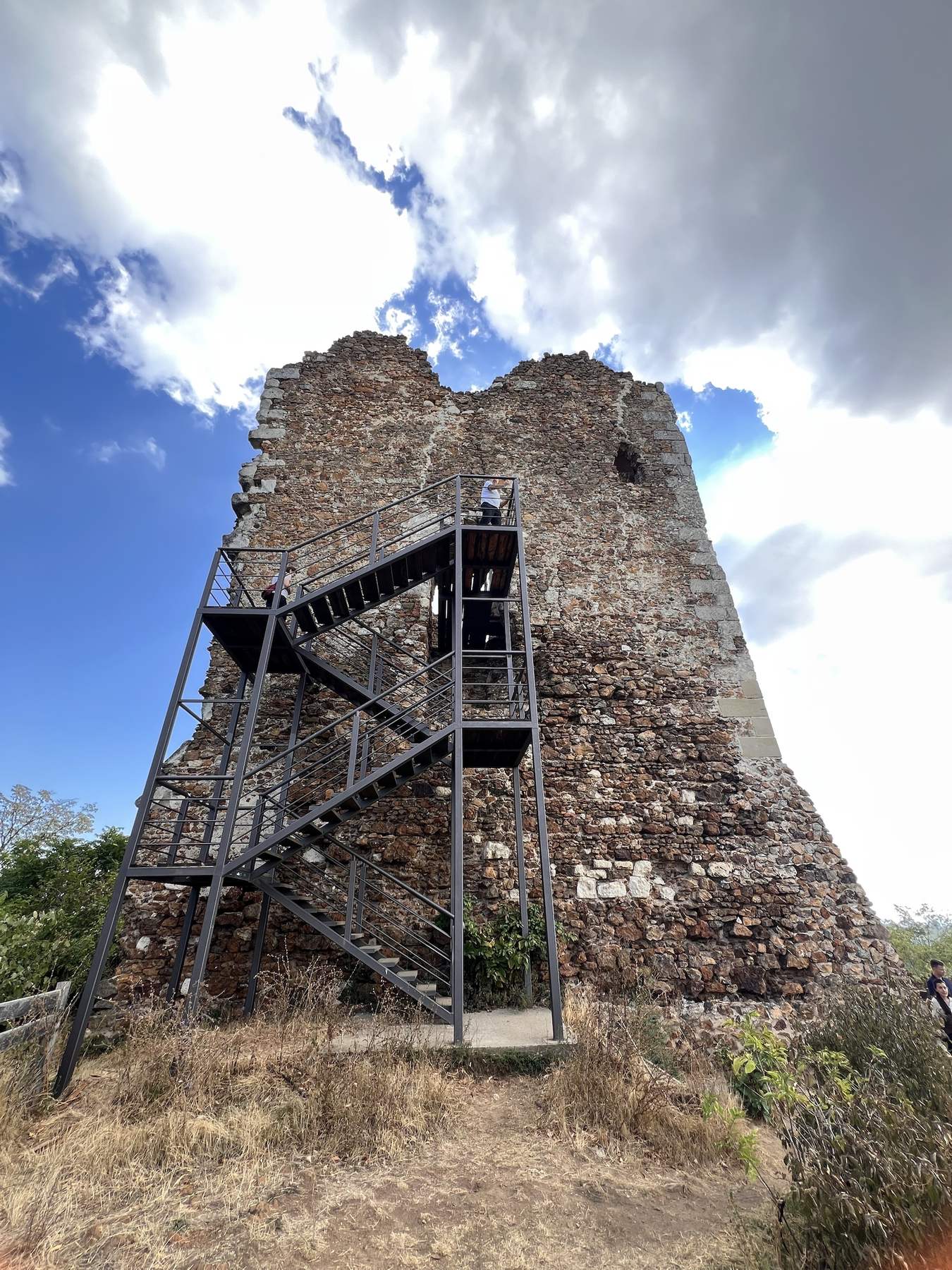
The 18-metre keep of a medieval fortress first recorded in 1315, on a hill above Vrdnik spa. You can climb it by a steel staircase and look out over Srem.
Bešenovačko jezero · about 25 minutes by car
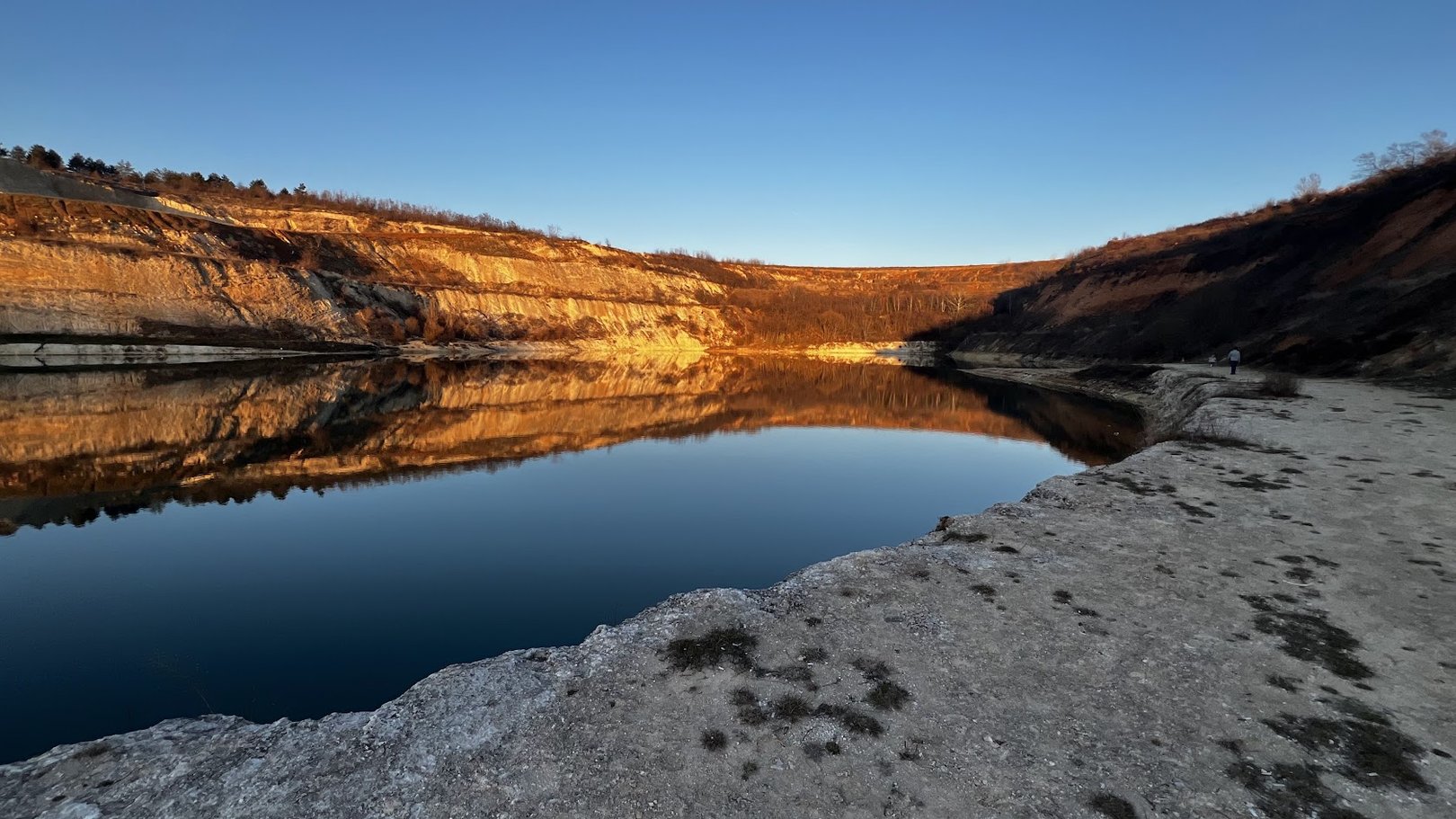
A turquoise lake in an old marl quarry on the south side of Fruška Gora: the most popular swimming lake of the area, with gently sloping places for small children.