Atlas · wild animals

Wildlife of Fruška Gora: animals you may meet around Rakovac

About 60 kinds of mammals live on Fruška Gora, from roe deer and wild boar to dormice and 15 species of bats, alongside 13 amphibians and 11 reptiles. Which wild animals you may meet around Rakovac, which were brought back, and which are better left alone.
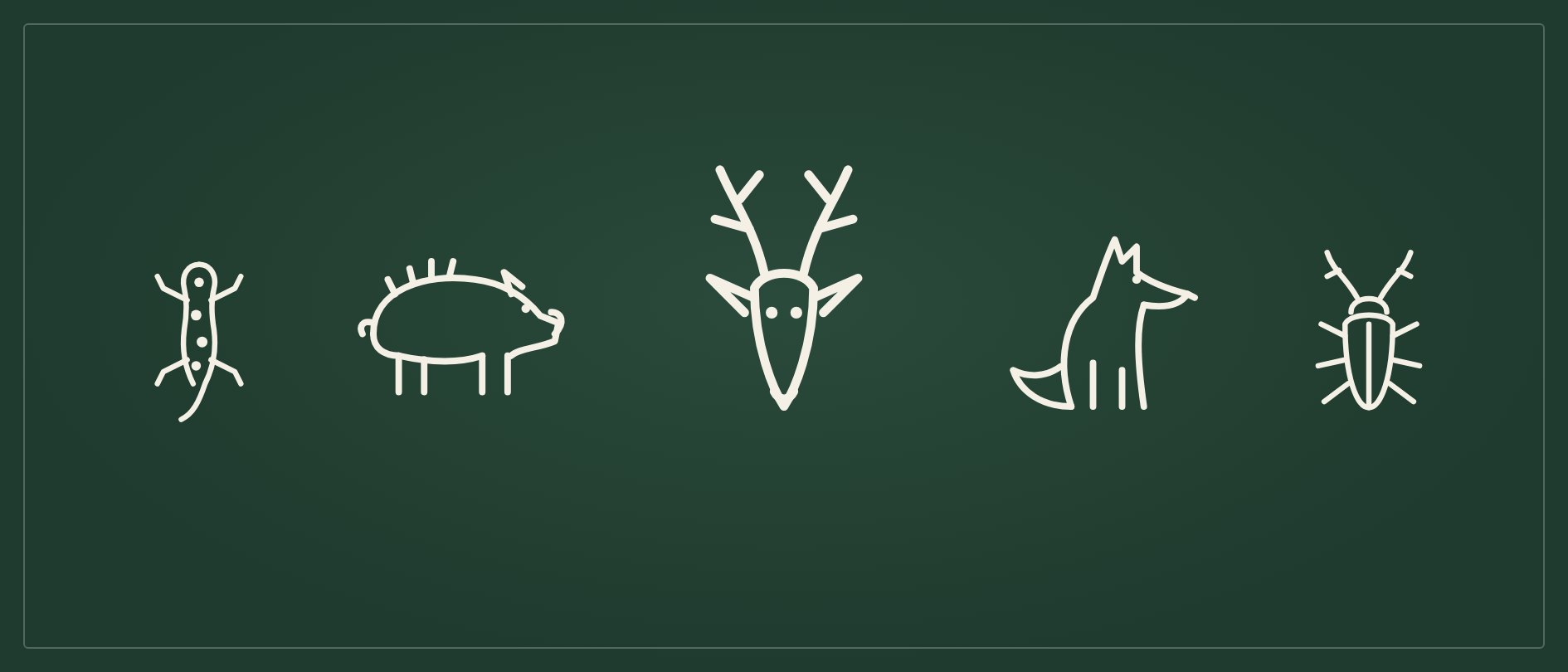
Line drawings of animals of Fruška Gora on a green background: deer, wild boar, golden jackal, fire salamander and stag beetle
Photo: rakovac.rs, illustration, © rakovac.rs

According to the National Park, roe deer and wild boar are still common, while the wildcat, badger, pine marten and the dormice are rarer or declining. The figures for the whole mountain (about 60 mammal species, 15 bat species, 13 amphibians and 11 reptiles) come from the Wikipedia article on Fruška Gora.

Large mammals

Roe deer

Capreolus capreolus

Still present in good numbers, says the National Park. Look for it at dawn and dusk at the forest edge and in the meadows above the village.

Wild boar

Sus scrofa

caution

Common in the forest; in autumn it turns over the ground in search of acorns. Keep away from a sow with piglets.

Red deer

Cervus elaphus

Bred in the National Park’s hunting reserves; the Vorovo reserve is closed to the public.

Fallow deer

Dama dama

Brought back to the mountain: a deer with white spots on a reddish coat and broad, shovel-shaped antlers.

Mouflon

Ovis gmelini musimon

A wild sheep with curled horns. In 2018 thirty animals were brought from Slovakia, raising the park’s herd to about 70.

European bison

Bison bonasus

caution

Europe’s largest land animal has lived in a fenced part of the National Park since 2022; in 2025 there were six. If you ever meet one outside the fence, keep your distance.

Golden jackal

Canis aureus

A newcomer: the National Park records it as a species new to the area. At night its howling chorus can carry from the fields.

Small mammals and bats

Badger

Meles meles

A night-time digger with a black-and-white striped face. The National Park lists it among species that are rare or declining.

Wildcat

Felis silvestris

rare

Shy and rare; it looks like a large tabby cat with a thick, blunt, ringed tail.

Pine marten

Martes martes

A climber of the treetops with a yellowish throat patch. According to the National Park its numbers have grown recently.

Edible dormouse

Glis glis

A grey, squirrel-like night animal that sleeps through the winter, often in hollow trees.

Hazel dormouse

Muscardinus avellanarius

A tiny golden-brown dormouse of hazel and bramble thickets.

European ground squirrel

Spermophilus citellus

protected

A protected natural rarity of open grassland; it lives in colonies and whistles when alarmed.

Bats

Chiroptera

protected

15 of Serbia’s 30 bat species live on the mountain, and all of them are strictly protected. At dusk you can see them hunting insects.

Amphibians, reptiles and insects

Fire salamander

Salamandra salamandra

caution

Black and yellow, out on forest paths after rain. Its skin releases a toxin: don’t pick it up, and wash your hands if you did.

Adder

Vipera berus

poisonous

A venomous snake with a dark zigzag along its back. Bites are rare and rarely fatal, but if bitten, keep calm and get medical help at once (194).

Stag beetle

Lucanus cervus

protected

Europe’s largest beetle; the males carry antler-like jaws. Protected.

Safety

  • Wild boar: if you meet a group with young, back away calmly and give them space.
  • Adder: look where you step and sit on warm, stony slopes; wear closed shoes. After a bite, keep the limb still and call 194.
  • Fire salamander: harmless if left alone; do not touch your eyes or mouth after handling one.
  • Bison and deer: watch them only from outside the fences.

The drawings are decorative, in the style of the Rakovac local identity, and are not meant for identification.

Sources

More in Nature

Old quarry · also called Rakovac Cave

Beli Majdan

A quarried hall in the hillside above the monastery, its roof held up by pillars of stone the quarrymen left standing. Ten minutes on foot from the monastery.

about 600 m from the monastery10 minutes one way Good for kids

Isposnica · 18th-century rock hermitage

Hermitage of Isaija Parivodski

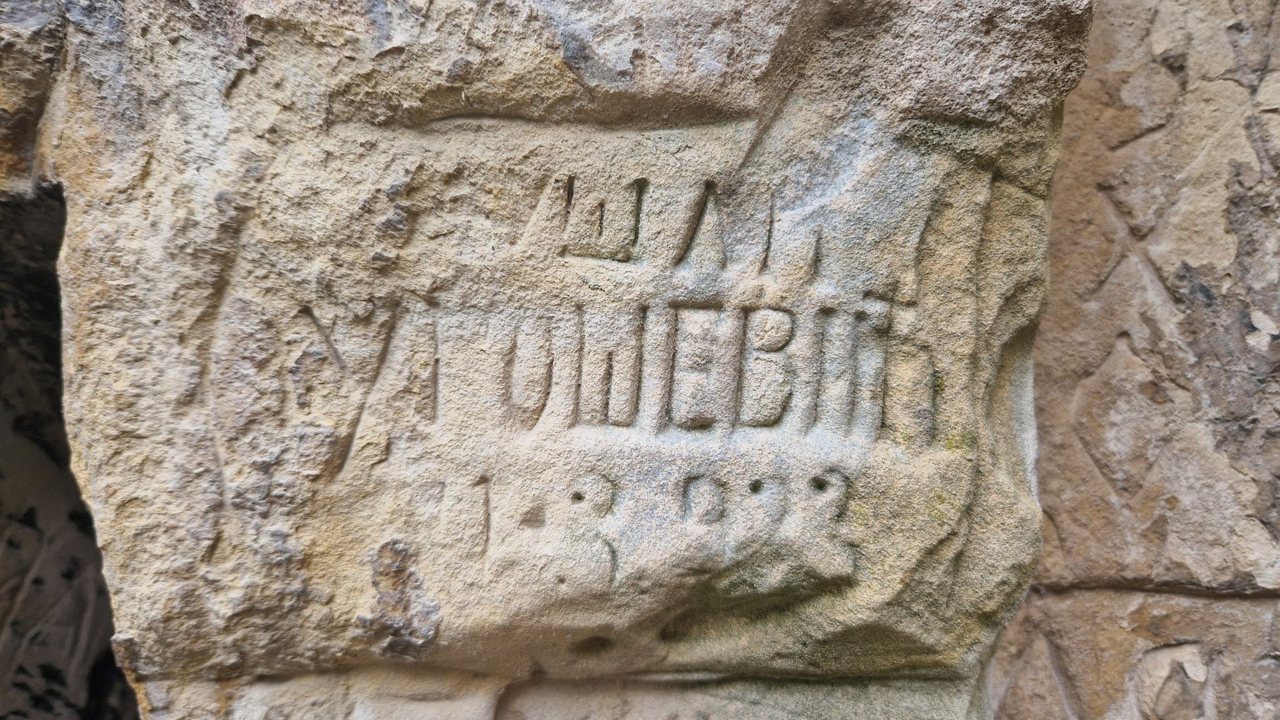
A tiny monk’s cell cut into a limestone cliff deep in the forest, named after Isaija Parivodić, a hieromonk of Rakovac who carved his name here in 1771. The only rock hermitage in Vojvodina.

about 40 minutes' walk from Beli Majdanabout 1 hour from the monastery

Dumbovački vodopad

Dumbovac Waterfall

A five-metre waterfall hidden in dense forest on the Dumbovac stream. About an hour’s walk from the monastery.

about 3 km one way from the monasteryabout 1 hour one way