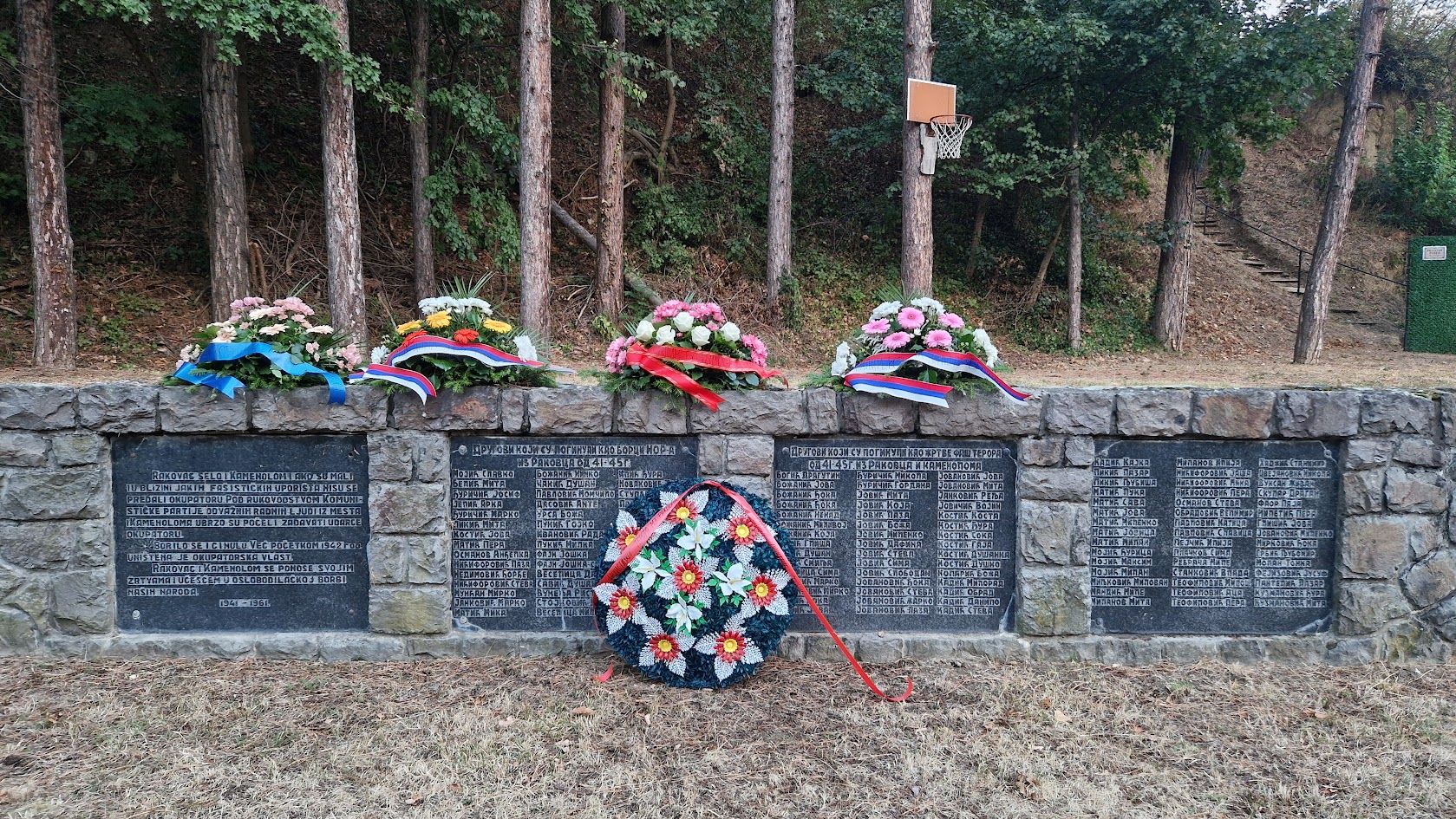
Rakovac began as a prnjavor, a settlement of serfs who worked the monastery’s land. The old village grew around the monastery, in the valley of the Rakovac stream.
After the old village was burned in 1943, it was not rebuilt in the same place. A new settlement, Novi Rakovac, grew further down the valley, towards the main road between Novi Sad and Beočin. Later the name was shortened to simply Rakovac, and the old part became Stari Rakovac. Over the following decades many families from Bosnia settled here, drawn by work at the Beočin cement factory. Because Novi Sad is so close, many weekend houses were also built in the hills.
Today Rakovac is one of the largest local communities of Beočin municipality. It has a branch of the Beočin primary school (grades 1–4), a kindergarten group and a good number of small and medium-sized firms.
Population
Census
Residents
1948
582
1961
1,060
1971
968
1981
1,081
1991
1,357
2002
1,989
2011
2,248
2022
2,137
Sources for 1991 differ slightly: the Serbian statistical book gives 1,357, English Wikipedia 1,375.
Seven thousand years in one place: a Neolithic village, a Roman villa, a medieval Benedictine abbey that became a fortress, and today an excavation site on the edge of Rakovac.
 Rakovac